
Custom silicone spatulas are often ordered as kitchen gifts, branded giveaways or retail houseware items. The product looks simple on a catalog, but the head, the handle and the joint between them each carry a different quality point. A few checks done early in sampling save rework later in the run, and they matter more in kitchen tools because food and heat are involved on every use.
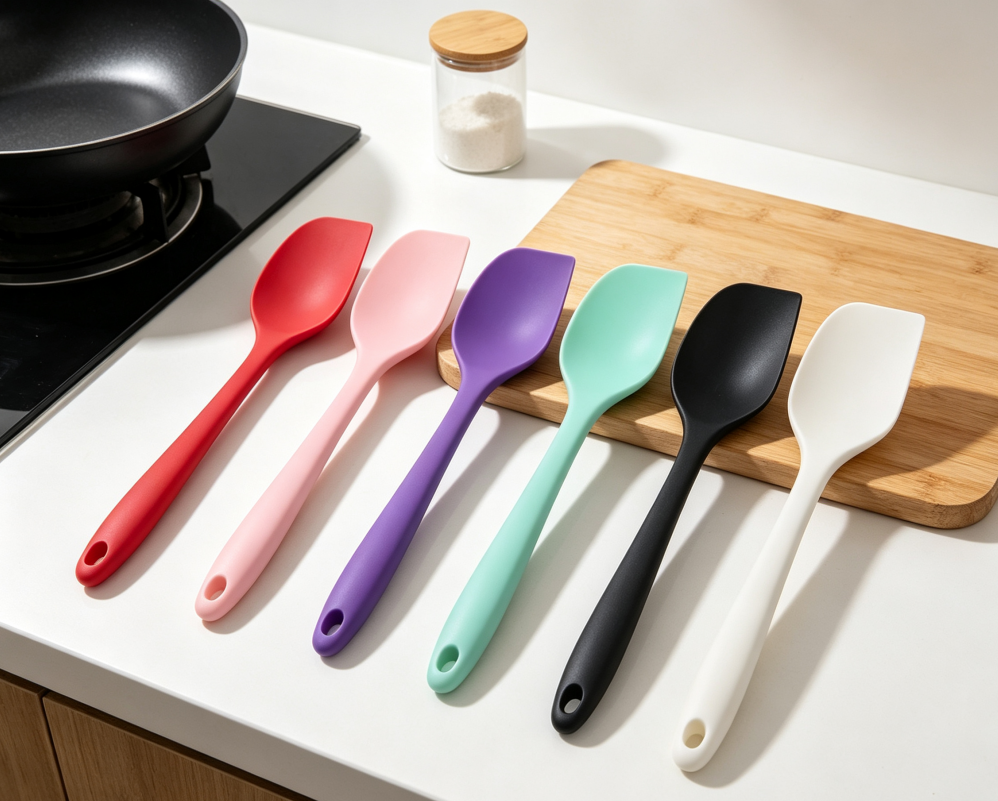
Start with the head itself. Confirm it is made of food-grade silicone and note the heat rating marked on the sample or the supplier material sheet. The head thickness and stiffness decide whether the tool flexes enough to scrape a bowl clean without bending out of shape. A head that is too thin folds under pressure and does not hold its edge; one that is overly stiff is harder to angle against curved mixing bowls. On a sample, press the head across a bowl edge and check that it returns to shape without a permanent crease.
The bond between the silicone head and the handle matters as much as the head material. A loose or separable joint can trap food between the two parts and is harder to wash, which matters for any kitchen item that contacts batter, dough or sauces. Many buyers prefer a seamless or tightly fitted head with no open gap around the attachment. Check whether the head slides, twists or pulls under light force, and look at whether the joint seam is clean with no flash or rough edge that catches on the hand.
Handle material, length and hanging hole should match the intended use. Home cooking and baking sets often call for a lighter handle and a comfortable grip, while commercial kitchens may need a longer handle and a firmer build. The hanging hole should sit where it does not interfere with the grip, and the handle finish should resist slips when hands are wet. If the set mixes silicone heads with wood, plastic or stainless handles, confirm how the two materials are fixed so the head does not loosen after repeated washing.
Color matching and logo placement are usually decided at the sample stage. The logo can sit on the handle, the head or a printed badge, and the position should be checked against real use so it does not wear against the bowl or disappear where the hand grips. Silicone color should be compared under normal lighting against the brand reference, since different finishes read slightly different under the same shade. Packaging, whether an individual poly bag, printed card or counter display, should also be confirmed before mass production, along with any care instructions and heat rating the destination market requires.
Material reports and any food-contact documentation for the target market should be reviewed with the supplier before approval. Sampling first lets the buyer check stiffness, head thickness, balance and the overall feel in hand, and to notice whether the handle runs hot or the head holds odor after washing. Keep the approved sample on file to compare later batches against, and settle head shape, length, color and branding together so the mold and print work start from one agreed specification rather than being adjusted after production begins.
TEL: +86(0)13926850059 * Mon - Fri 8:00 - 17:00
Mail: zwei@hwako.hk