
When sourcing small custom gifts such as charms, coaster mats, luggage tags, badge-style labels and phone stand accessories, buyers often choose between silicone and PVC soft rubber. The two materials look related on a finished piece, but they behave differently in touch, temperature, detail reproduction and cost. Matching the material to how the gift will actually be used avoids picking one that looks right in the sample but does not fit the product line.
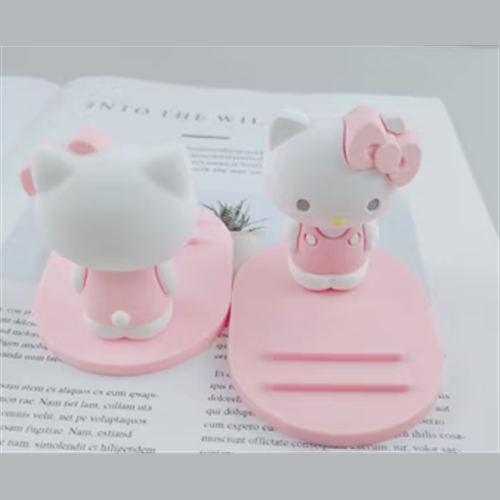
Silicone tends to feel softer and more elastic, with a mild rubbery give that returns after bending. It performs better at higher temperatures and is commonly chosen where food contact, heat resistance or dishwasher use matters. It can be colored across a range of shades, although very fine layered details and thin color outlines can be harder to reproduce cleanly than with molded PVC. Silicone pieces also tolerate repeated flexing, which suits items that get clipped onto bags, keys or straps and pulled on throughout the day.
PVC soft rubber, also referred to as soft glue or rubber, can hold crisp outlines and thin color layers more readily, which suits flat detailed charms, labels and shaped promotional pieces where the artwork has small lines or multiple color zones. It is often more budget-friendly for shaped giveaways, and the surface can carry a printed or molded logo with clean edges. PVC is not intended for high-heat use or direct-food contact in the same way as silicone, so it should be kept away from oven, microwave and food-contact applications when that is part of the product description.
Temperature and contact are the first deciding factors. Gifts that sit near kitchenware, travel bottles or see repeated temperature changes are usually safer in silicone. Flat, detailed promotional charms, keychain drops, bag tags and labels at a lower unit cost often fit PVC better. For items that will touch skin or carry a food-contact claim, confirm the relevant material grade and any documentation the destination market expects, rather than relying on the supplier's general wording.
Color and artwork detail should be checked against the actual design. Silicone shows colors softly and may shift slightly after curing, while PVC holds sharper color boundaries. If the artwork uses very thin lines, small text or closely adjacent colors, ask the supplier which material reproduces those lines cleanly, and review a sample before committing the full order. Matte and glossy finishes also read differently, so the finish choice should be made alongside the color reference, not left to default.
Cost, durability and storage are the remaining practical points. PVC often costs less per unit on shaped promotional pieces, while silicone can justify its price where heat, flex or food contact is required. Neither material should be judged from a catalog photo alone: samples let the buyer feel the stiffness, check the edge finish, see how the color sits next to the logo, and confirm the weight feels appropriate for the gift. Material choice should follow the product's intended use, and samples are recommended before bulk production so a material that suits the market is locked in at the sampling stage.
TEL: +86(0)13926850059 * Mon - Fri 8:00 - 17:00
Mail: zwei@hwako.hk